

Healthy-looking skin does not always need an aggressive treatment plan.
Sometimes, what your skin needs most is a thoughtful reset: removing surface buildup, clearing congestion, restoring hydration, and choosing the right level of treatment for what your skin is experiencing now.
That is where a Hydrafacial can fit.
Hydrafacial is a non-invasive facial treatment that combines cleansing, exfoliation, extraction, and hydration in one appointment. Because the treatment can be customized, it can be useful for people looking to improve overall skin quality as well as concerns such as dryness, congestion, uneven texture, dullness, and the appearance of fine lines.
If you are considering your first Hydrafacial in Bellevue, here is what to know before your appointment.
What Is a Hydrafacial?
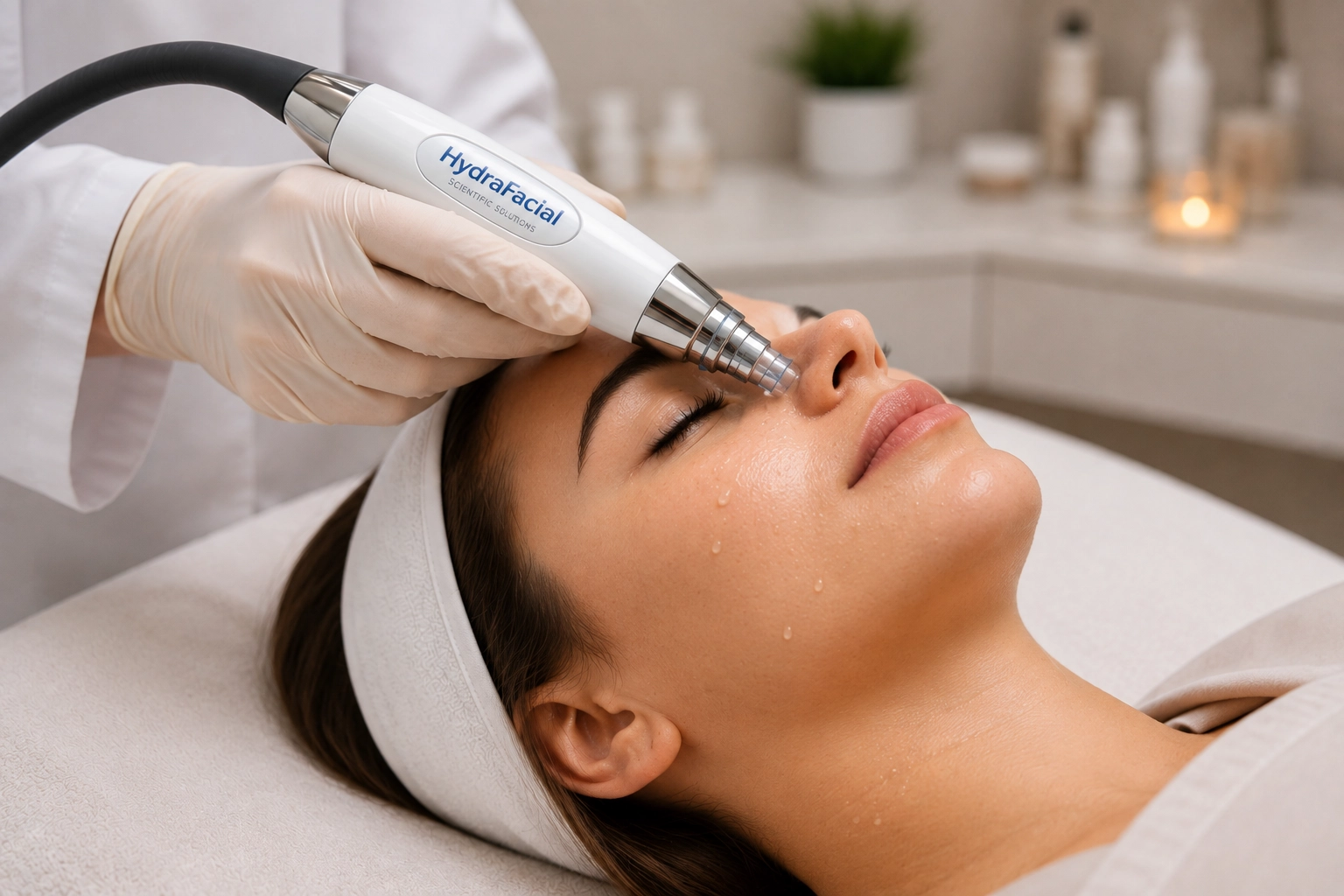
A Hydrafacial is a multi-step skin treatment performed with a specialized device.
Rather than relying on manual exfoliation and extractions alone, the device uses a controlled combination of exfoliation, gentle suction, and serum delivery to remove surface debris and impurities while replenishing the skin with hydration.
In simple terms, the treatment works through several complementary steps:
- Cleansing the skin
- Exfoliating dead surface cells
- Loosening and extracting pore congestion
- Delivering hydrating and nourishing serums
- Customizing the treatment when appropriate for individual skin concerns
The goal is not to dramatically change the skin in one appointment. It is to leave it feeling cleaner, smoother, more hydrated, and refreshed.
What Are the Benefits of a Hydrafacial?
One reason Hydrafacial has become popular is its ability to address several aspects of skin quality during the same treatment.
Depending on your skin and the treatment selected, potential benefits may include:
- Improved hydration
- Smoother-feeling skin
- A brighter, more refreshed appearance
- Gentle exfoliation of surface buildup
- Clearing of pore congestion and impurities
- Improvement in the appearance of uneven texture
- Temporary improvement in the appearance of pores
- Softer appearance of some fine lines
Results vary from person to person, and a Hydrafacial should not be viewed as a replacement for treatments designed to address deeper wrinkles, significant pigmentation, acne scarring, or skin laxity.
That distinction matters.
The right treatment depends on what you actually want to improve.
What Happens During a Hydrafacial?
Your first appointment should begin before the device ever touches your skin.
A provider should first understand your skin, your current routine, what you are hoping to address, and whether there are any reasons the treatment should be modified or postponed.
From there, a Hydrafacial typically progresses through several stages.
1. Cleansing and Exfoliation
The treatment begins by cleansing the skin and gently removing accumulated surface cells.
Exfoliation helps reveal fresher-looking skin and prepares the surface for the steps that follow.
2. Gentle Resurfacing
Depending on the Hydrafacial protocol selected, a gentle peel solution may be incorporated to further loosen surface buildup and congestion.
This is different from choosing a more intensive standalone chemical peel. The treatment should be selected according to your skin rather than simply choosing the strongest available option.
3. Extraction
The Hydrafacial device uses controlled suction to help remove impurities and congestion from the pores.
For many clients, this is one of the treatment's most appealing features because it provides extraction without relying entirely on manual squeezing.
4. Hydration
Hydrating serums are delivered to the skin as part of the treatment.
This helps counter the dry or tight feeling that can sometimes follow exfoliation and contributes to the refreshed appearance associated with Hydrafacial treatments.
5. Personalization
Not every Hydrafacial needs to be identical.
Depending on the treatment level and your skin concerns, your provider may recommend additional elements or targeted boosters.
The important part is not how many steps can be added. It is choosing what makes sense for your skin.
What Will My Skin Look Like After a Hydrafacial?
Many people notice that their skin looks brighter and feels smoother and more hydrated shortly after treatment.
Because HydraFacial is non-invasive, there is generally little interruption to a normal routine. Some people may experience temporary pinkness, sensitivity, or mild irritation depending on their skin and the products used.
Your individual response can vary.
If you are planning a Hydrafacial before a wedding, photoshoot, vacation, or another important event, consider having your first treatment well enough in advance to learn how your own skin responds rather than trying a new treatment immediately before the event.
How Long Do Hydrafacial Results Last?
There is no single timeline that applies to everyone.
Some of the immediate changes—particularly the refreshed appearance and feeling of hydration—are naturally temporary. Skin continues to produce oil, shed cells, encounter environmental exposure, and respond to your daily skincare habits after the appointment.
For that reason, some clients choose Hydrafacial as an occasional treatment before an event, while others incorporate it into a broader skin-maintenance routine.
How often you should have one depends on your skin, your goals, the other treatments in your plan, and your home skincare routine.
More treatment is not automatically better.
Is Hydrafacial Good for Every Skin Type?
Hydrafacial can be adapted for a range of skin types and concerns, but that does not mean every person should receive exactly the same treatment.
Skin sensitivity, active irritation, certain skin conditions, recent procedures, medications, allergies, pregnancy considerations, and the products used during treatment can all affect what is appropriate.
This is why consultation matters even for a treatment that may seem straightforward.
At GloLab, treatment selection begins with the skin in front of us—not with a standard protocol applied to everyone.
Hydrafacial vs. a Traditional Facial: What's the Difference?
Both can have a place in a thoughtful skincare routine, but the experience is different.
A traditional facial may rely more heavily on manually applied products, massage, exfoliation, masks, and manual extractions.
Hydrafacial incorporates device-assisted exfoliation, suction-based extraction, and serum delivery into a structured treatment.
Neither is automatically “better.”
The better choice is the one that aligns with your skin condition, goals, preferences, and overall treatment plan.
Is a Hydrafacial Worth It Before a Special Event?
It can be a good option for someone primarily looking for skin that appears refreshed, hydrated, and polished without choosing a more intensive resurfacing procedure.
But timing still matters.
If you have never had a Hydrafacial before, scheduling your first one immediately before an important event is not ideal. Give yourself time to understand how your skin responds.
For existing clients who already know their response to treatment, your provider can help determine appropriate timing.
Can Hydrafacial Treat Acne?
Hydrafacial may help with oil, surface debris, congestion, and the appearance of some blemishes, and specific Hydrafacial protocols are designed for acne-prone skin.
However, acne is a medical skin condition with different causes and levels of severity.
A facial should not automatically be treated as a substitute for medical acne care. Persistent, painful, cystic, or scarring acne may require evaluation and treatment by an appropriate medical professional.
The distinction between improving congested skin and treating acne itself is important.
How Should I Prepare for My First Hydrafacial?
Your provider should give you instructions based on your skin and treatment plan.
In general, come prepared to discuss:
- Your current skincare products
- Prescription or topical medications
- Recent facial treatments
- Known sensitivities or allergies
- Active irritation or breakouts
- Your primary skin concerns
- Any upcoming events
Avoid making major changes to your skincare routine immediately before an appointment unless your provider has advised you to do so.
What Should I Do After a Hydrafacial?
Aftercare should be tailored to the treatment performed and your skin.
Your provider may recommend keeping your routine simple, avoiding unnecessary irritation, using appropriate hydration, and protecting your skin from sun exposure.
This is also a good time to ask which products should be resumed immediately and whether any active ingredients should temporarily be held.
Good skin care does not end when the facial does.
Frequently Asked Questions About Hydrafacial
1. Does a Hydrafacial hurt?
Hydrafacial is generally considered a comfortable, non-invasive treatment. You may feel light suction and movement of the treatment tip across the skin rather than the discomfort associated with more intensive resurfacing procedures.
2. How long does a Hydrafacial take?
Treatment time varies according to the HydraFacial selected and whether additional steps are included. Some treatments can be completed in around 30 minutes, while more comprehensive sessions may take longer.
3. Will I peel after a Hydrafacial?
Significant peeling is not typically the goal of a standard Hydrafacial. Individual skin responses vary, particularly when exfoliating solutions or other customized elements are incorporated.
4. Can I wear makeup after my treatment?
Your provider can give you specific post-treatment guidance based on your skin and the treatment performed. If possible, many clients prefer to let freshly treated skin remain clean for a period after their appointment.
5. How often should I get a Hydrafacial?
There is no schedule that is right for everyone. Frequency should reflect your skin goals, response to treatment, home skincare routine, and any other professional treatments you receive.
6. Is one Hydrafacial enough to see a difference?
Some people notice improved hydration, smoothness, and radiance after a single treatment. More persistent concerns may require an ongoing skincare strategy or a different treatment altogether.
A More Personal Approach to Skin
The question is not simply, "Should I get a Hydrafacial?”
A better question is
What does my skin need right now?
For one person, that may be hydration and gentle exfoliation. For another, concerns such as acne scarring, pigmentation, texture, or signs of aging may call for a different approach.
At GloLab, the goal is to understand those differences before recommending treatment.
If you are considering a HydraFacial in Bellevue, your appointment can begin with a conversation about your skin, your goals, and the treatment options that make sense for you.
Ready to learn what your skin needs? Book a personalized consultation with GloLab.